How To Make Money While Sleeping

How interesting and exciting when we hear about someone who is making money in every second. That person is earning while he is walking, while he is sipping tea, while he is reading newspaper, while he is watching TV and while he is sleeping. How excited it is! This type of income is called Passive Income. Passive income is when you are earning while you aren’t actively working for it. It means there is no need to go anywhere at particular time and no need to take extra efforts. Initially it require some investment of time and/or money, once you have it created, it can continue moving with minimal effort. We all want to earn like this but how; this is the main question and for sure it is not easy and it is not an overnight process. So let’s see how we can make money while sleeping.

1. Blogging:

Blogging is the most popular and simple way to earn income while sleeping. You just need to create your own topics that people would be interested in reading and sharing. Make sure the topics you write about are popular. After popularity of your website and blogs, you can earn money every time when someone clicks on them. Affiliate Marketing, Contextual Ad Feeds such as Google AdSense, Selling Ad Space Directly, and Sponsorships also other options of passive income.

2. Create Your Own Products To Sell:

If you have expertise in a certain area, then you can start creating your own products. For example, if you are a blogger, you can create eBooks or videos for your audience and sell them. This is also another great way to earn money while you sleep. Initially, it may take a lot of work to create and market your products, but once it’s completed, you can just set back; your income will start automatically. This process also builds trust in your audience.

3. Royalties:

If you have inbuilt skills like writing, acting, musician, etc. you can write your own book. A publisher can offer to publish it and will pay you royalties (a percentage of the sale) for each book sold. It means you did efforts initially and then on every sale of your book, you will get money as a royalty always. Royalty could be of your products or your place.

4. Drop-shipping:

E-commerce is exploding and it is expected that in 2021, more than 2.15 billion people will be shopping online. So this is the best time to start your own e-commerce store. Amazon, e-Bay, Flipkart are the best example and this trend will definitely increase in future. Drop shipping is unique in that you don’t have to source and store inventory. You just build and manage the site. Once your site is built and marketed properly, you can start selling products and earning money while you sleep.

5. Invest in Stock Market:

Warren Buffet, Chairman and CEO of Berkshire Hathaway is one of the best and live example from all of us. He started his investment in NY Stock Market when he was 14 and today, he is one of the richest man around the world. Investing in stock market is one of the popular and traditional options to earn passive income. But make sure while investing money, do some research and then make investment.

6. Income from Real Estate:

Income from real estate is also one of the most popular and traditional way to make money while you sleep. You can rent out your home, your office space, your parking space or your garage when not in use. You can make money without doing anything and every month you will get your rent. Rental income is safe, secured and fixed passive income.

7. Network Marketing:

Network Marketing is not a new trend but now days this industries’ growth is phenomenal. It is expected that in 2025, more than half of the population of the world will join network marketing. It is a peer to peer networking for any product or for any service. Initially you need to invest a lump sum amount and more time. If all goes well, you will be getting a handsome return over a period of time.

Free To Hit is writing and reading platform for bloggers. You can read this blog also on Free To Hit at How To Make Money While Sleeping


Coronavirus & Health Insurance Policy

The novel Coronavirus (COVID-19) is declared as pandemic on March 11, 2020 by the World Health Organization (WHO). Now as of March 31 – 2020, this pandemic spread around the world in more than 190 countries. Most of the countries are lockdown. No one is going out for any reason as every person is so scared. In these days, the Coronavirus is on top of everyone’s mind now. Because the condition is not good and not in control, in this chaos, there are so many questions and confusions around about our health insurance policy. So let us see whether your health insurance policy covers the Coronavirus ailment or not.     

1.      Does your health insurance policy cover Coronavirus-related ailments:

Yes, your health insurance policy covers Coronavirus-related ailments. Any person who is hospitalized due to coronavirus and takes treatment will be covered as any other illness. The subsequent claims will be processed as per regular norms. The Insurance Regulatory Development Authority of India (IRDAI), in a circular issued earlier this month, said coronavirus treatment would be covered like any other illness “under products where hospitalisation is covered”. For all policies covering the disease, the regulator also directed the companies to cover the cost of admissible expenses, including treatment during quarantine period. This applies to both individual and group health insurance policies.

2.      If the disease is declared as epidemic/pandemic than:

If any disease is declared as an epidemic or pandemic by the WHO or Indian government, or both, then claims might not be payable as such claims are excluded under many health insurance policies.

3.      Is testing for Coronavirus covered by the insurance policy:

No, testing expenses are not covered by regular health insurance policies, unless there is a linked hospitalization for treatment. Only if the patient is tested positive and later hospitalized, will the diagnostic expenses be covered by the pre-hospitalization extension; otherwise diagnostic costs are excluded.

4.      If you contract the disease within the policy waiting period:

A waiting period is a pre-fixed time period starting from the date of purchase of the policy. Coverage of many diseases starts only after this waiting period is over in most health insurance policies. If you contracted the disease within the policy waiting period, you will not get claim filed for treatment of any disease.

5.      Do I have to pay extra for coverage of Coronavirus within my existing health insurance:

No, there is no extra charge for the coverage of Coronavirus.

6.      If you or your family member recently travelled to Coronavirus affected countries:

In the case, you will be covered under regular indemnity health insurance policy as long as you are being quarantined in India.

7.      Are there special Coronavirus health insurance plans available:

Yes, there are many insurance providers who are providing health insurance plan specially for Coronavirus. Some insurance providers are offering group plans for Coronavirus specific coverage. Companies can buy these plans for their employees.

Free To Hit is writing and reading platform for bloggers. You can read this blog also on Free To Hit at Coronavirus & Health Insurance Policy

How To Clean Fruits and Vegetables During The Coronavirus Outbreak

The entire world is so scared and afraid from Coronavirus (COVID-19) in these days. No one is going out and maintaining social distance. I would say that everyone has gone into self-quarantine to battle the coronavirus outbreak. Coronavirus is primarily transmitted through the air, via contact with an infected person’s body fluids (from coughing or sneezing) or from contact with surfaces on which an infected person has sneezed or coughed. According to the Food and Drug Administration (FDA), there have been no reports of the virus being transmitted via food or food packaging. As of March 7, the European Food Safety Authority has also confirmed the lack of food-related reports, adding that other coronaviruses, like SARS and MERS, have been shown to need a human or animal host and cannot grow in food. But it is always good to wash your hand, vegetable and fruit because if the produce is contaminated by a sick person and you touch it and then touch your face, you can become infected.

So question is what are the best practices when washing fruit and vegetables?

  • Most medical agencies recommend that simply washing your fruits and vegetables with running water remove most of the viruses.
  • If needed, you can scrub vegetable with a scrubbing brush rather than using special produce washes.
  • Don’t bleach the veggies or use chlorine on the fruit. No disinfecting wipes or isopropyl alcohol, either.
  • Do not wash fruits and vegetables with soap/detergent and water. Those soaps and detergents are designed for washing hands or for washing dishes and they’re not designed for washing food. Eating soap can lead to nausea and can lead to upset stomach.
  • Cut out any damaged or bruised parts of the fruit or vegetable under running water.
  • Equally important is the sanitation of the preparation area and tools, from sinks to cutting boards. Don’t forget to clean and dry your vegetable brush between uses.
  • Store raw and ready-to-eat foods separately
  • Always wash your hands thoroughly before and after handling raw food.

Here are a few shopping tips also to maintain hygiene:

  • Visit stores during off-peak hours.
  • While shopping for items, use sanitizers before handling any cart handles, and use a wipe to clean the handles.
  • Maintain one-metre distance with other people while shopping.
  • As soon as you are back from shopping, wash or sanitize your hands thoroughly.
  • Pay with plastic versus paper to minimize contact with hands or cash.

Free To Hit is writing and reading platform for bloggers. You can read this blog also on free to hit at How To Clean Fruits and Vegetables During The Coronavirus.

Impact Of Coronavirus On Economy

Already the world economy was in crisis. In the meantime, coronavirus break the backbone of almost entire world. Coronavirus affected specially the developing and under developed countries. Now more than 130 countries are affected; almost 7500 people died and more than 2 lakhs cases reported around the world. Dow Jones, FTSE, Nikkei, BSE, and all the share market of the world is going down.

Here are the lists of the top 5 business falls due to coronavirus.

Travel Industry:

Coronavirus started from Wuhan City in China and it spread around the country and then around the world. On March 12, the World Health Organization (WHO) declared that the virus is now a pandemic. Sectors such as tourism, aviation, hospitality and trade are the first industries that affected first. Most of the countries stopped arrival on visa facility and stopped on entering on foreign visitors. Even people are so scared that they are not even visiting locally. Now the Travel Industry is on the ground. Many flights have been cancelled, many hotel booking have been cancelled. The Pandemic has been epidemic in its hit to the Travel Industry. From airports to Hotels, from small travel agents to big ones, all stands affected.

Service Industry:

Due to coronavirus, cities are lockdown, countries are lockdown. Companies are promoting their employees for work from home and some of the companies are asking people to take leave without pay as they do not have enough work this time. Banking to telecom to hotel; every industry is suffering right now because they know that there is no cure yet for the Coronavirus; prevention is the only way.

Retail Stores:

Government and medical teams are again and again announcing to maintaining social distance and advising to avoiding public places and even advising not to go to your relatives and friends. In adherence to avoiding public places, retail stores and shopping malls are facing a sharp fall in their footfalls. People prefer Online Shopping so retail sectors also suffered very badly due to coronavirus.

Hollywood-Bollywood and Cinema Halls:

All the shooting and releases of new films have been stopped to avoid people coming closer in volumes. Cinema halls are already closed due to this pandemic. The cycle of money stopped. So this industry also affected very badly.

Real Estate:

A report says that as compared to the 2002-2003 SARS epidemics, the new coronavirus outbreak will have a “more severe impact” on the property sector. Sales growth in third- and fourth-tier cities will likely not recover this year. It will take a long time to recover foot traffic in shopping malls as people do not have money right now and rotation of money also stopped. So it will take time to come on track this sector.

Free To Hit is writing and reading platform for bloggers. You can read this blog also on free to hit at Impact of Coronavirus On Economy.

How To Gain Weight

Some of the people are trying to reduce their weight and some wants to gain their weight. Sometime I think that there should be a technique where a fatty person can give their excess weight to a thin person. If it would have been possible then many people would be live in peace without tension. But it is not possible because it’s just a hypothetical thought. Anyway, but you will be surprised to know that there are more obese people than underweight people in the world. A survey report states that almost 9.5% of people are underweight worldwide.

Just like obesity, underweight is also a serious issue and being underweight can cause health problems. For some people, gaining weight can be just as difficult as losing weight for others. However, simply adding certain foods to your diet can make your weight gain efforts both healthy and more effective. The basic principle of gaining weight is to consume more calories than you burn.

Causes to become underweight:

  • Eating disorders
  • Thyroid problems
  • Celiac disease
  • Diabetes
  • Cancer
  • Infections

If you want to gain weight, it’s very important to do it right and live your life very discipline because gaining weight is not an overnight procedure. It will take time and most importantly, you have to faith in ourselves and have patience. There are plenty of normal-weight people who get type 2 Diabetes, Heart Disease and other health problems often associated with Obesity.

Here are the following tips about nutrient-rich foods that can help a person to gain weight.

Eat More Calories Than Your Body Burns:

To gain weight, you need to eat more calories than your body burns. On an average, you need to take 500-700 calories more than you burn each day. You can increase calories by adding nut or seed toppings, cheese, and healthy side dishes. You should add Almonds, Sunflower seeds, fruit, whole-grain, wheat toast, eggs, etc. in your daily food.

Eat plenty of Carbs and Fat:

Carbs and Fat is an essential part of your diet. For gaining weight, eat plenty of high-carb and high-fat foods. It is best to eat plenty of protein, fat and carbs at each meal. It can be a healthy way to regulate your weight. Full fat milk, full fat yogurt, cheese, butter, nuts, seeds, crackers or dried fruits are best to eat. Olives and cheese are great when you want something really savory. Oils, such as those derived from olives and avocados, contribute calories and heart-healthy unsaturated fats. A tablespoon of olive oil will contain about 120 calories. Dark chocolate is a high fat and high-calorie food.

Eat plenty of Protein:

Protein is the single most important nutrient for gaining weight. Protein is a double-edged sword. It’s also highly filling, which may reduce your hunger and appetite significantly, making it harder to get in enough calories. Muscle is made of protein and without it, most of those extra calories may end up as body fat. For gaining weight, aim for 0.7–1 grams of protein per pound of body weight (1.5–2.2 grams of protein per kilogram).  You can get protein from red meat, fish, eggs, dairy products, legumes, nuts and beans. You can also use a supplement such as whey protein.

Eat plenty of vegetables & seasonal fruits:

Seasonal vegetables and seasonal fruits are the best for our health and for gaining weight. Avocados have healthy fat and are a versatile ingredient. Banana is also very useful. Starchy vegetables like potatoes, sweet potatoes, squash, and corn can help you gain weight as well. Starchy food provides energy in the form of glucose. Glucose is stored in the body as glycogen. Research indicates that glycogen can improve performance and energy during exercise.

Eat more meals:

If eating large amounts of food may not seem appealing or if you have poor appetite – eat more meals. Try to fit 5-6 smaller meals into your day. Eating smaller meals throughout the day will increase your calorie intake and can help you gain weight. Try to eat snacks in between.

Drink plenty of fluid:

If you want to gain weight, milk and other high-calorie beverages are good for you. You can also take smoothies and shakes. Put peanut butter or protein powder in your smoothies and shakes. Plant-based milks like coconut milk and peanut milk are fattening and delicious. Go for full-fat milk rather than skim.

Here are 9 more tips to gain weight:

  1. Don’t drink too much water before meals and just after meals.
  2. Drink full fat milk. Drinking milk is the best and simple way to get more high-quality protein and calories.
  3. Use bigger plates. Definitely use large plates if you’re trying to get in more calories, as smaller plates cause people to automatically eat less.
  4. Add cream to your coffee. This is a simple way to add in more calories.
  5. Take some desserts. Dark chocolate, whole fat yogurt with fruit and granola, trail mix, granola bars, or whole grain pastries are the best in weight gain.
  6. Get quality sleep. Sleeping also plays an important role in gaining weight.
  7. Eat your protein first and vegetables last. If you have a mix of foods on your plate, eat the calorie-dense and protein-rich foods first. Eat the vegetables last.
  8. Don’t smoke and drink. Smokers tend to weigh less than non-smokers, and quitting smoking often leads to weight gain.
  9. Do regular exercise and Yoga.

Free to hit is writing and reading platform for bloggers. You can read this blog also on free to hit at How to Gain Weight.

What Is Cryptocurrency

What is Cryptocurrency?

Cryptocurrency is a digital and virtual currency which means there’s no physical currency or coin or bill. It is a new form of digital asset based on a network that is distributed across a large number of computers. Cryptocurrency is secured by cryptography that to provide secure online transactions which makes it nearly impossible to counterfeit or double-spend. Cryptocurrencies can be used to buy goods and services and it work using a technology called Blockchain. Blockchain is a decentralized technology spread across many computers that manages and records transactions.

Cryptocurrency is not controlled by any central authority and government. It means cryptocurrency stored online does not have the same protections as money in a bank account. If you store your cryptocurrency in a digital wallet provided by a company, and the company goes out of business or is hacked, the government may not be able to step and help get your money back as it would with money stored in banks or credit unions.

The History of Cryptocurrency:

Cryptocurrency is simply decentralizing of electronic money that emerged as a side product of another invention. Although the concept of cryptocurrency has come in 1990s but it was came in limelight in 2009 when Bitcoin was invented. In the meantime various versions of cryptocurrencies came and failed. Satoshi Nakamoto (now also known as Craig Steven Wright), the unknown inventor of Bitcoin, the first and still most important cryptocurrency, never intended to invent a currency. The vision of Bitcoin was to create a decentralized currency system that did not require the involvement of banks or any other intermediaries. Satoshi said he developed “A Peer-to-Peer Electronic Cash System” and that was the birth of Cryptocurrency.

How Cryptocurrencies works:

Cryptocurrency is a decentralized currency system where you do not have the server so every single entity of the network to do this job. Every peer in the network needs to have a list with all transactions to check if future transactions are valid or an attempt to double spend. You can understand with this example.

As cryptocurrency is a Peer-to-Peer Electronic Cash System – transactions are sent between peers using software called “Cryptocurrency Wallets.” The person creating the transaction uses the wallet software to transfer balances from one account (a public address) to another. To transfer funds, knowledge of a password (a private key) associated with the account is needed. Transactions made between peers are encrypted and then broadcast to the cryptocurrency’s network and queued up to be added to the public ledger. Transactions are then recorded on the public ledger via a process called “mining”. All users of a given cryptocurrency have access to the ledger if they choose to access it. The transaction amounts are public, but who sent the transaction is encrypted (transactions are pseudo-anonymous). Each transaction leads back to a unique set of keys. Whoever owns a set of keys, owns the amount of cryptocurrency associated with those keys (just like whoever owns a bank account owns the money in it). Many transactions are added to a ledger at once. These “blocks” of transactions are added sequentially by miners. That is why the ledger and the technology behind it are called “block” “chain.” It is a “chain” of “blocks” of transactions.

List of Cryptocurrency:

CryptocurrencyMarket Capitalization
Bitcoin (BTC)$ 303.1 Billion
Ethereum (ETH)$ 14.14 Billion
Ripple (XRP)$ 11.7 Billion
Litecoin (LTC)$ 4.98 Billion
Bitcoin Cash (BCH)$ 4.1 Billion
Tether (USDT)$ 4.1 Billion
EOS (EOS)$ 2.9 Billion
Binance Coin (BNB)$ 2.4 Billion
Bitcoin SV (BSV)$ 1.5 Billion
Stellar (XLM)$ 1.2 Billion

Free To Hit is author of this blog and you can read this blog at What Is Cryptocurrency.

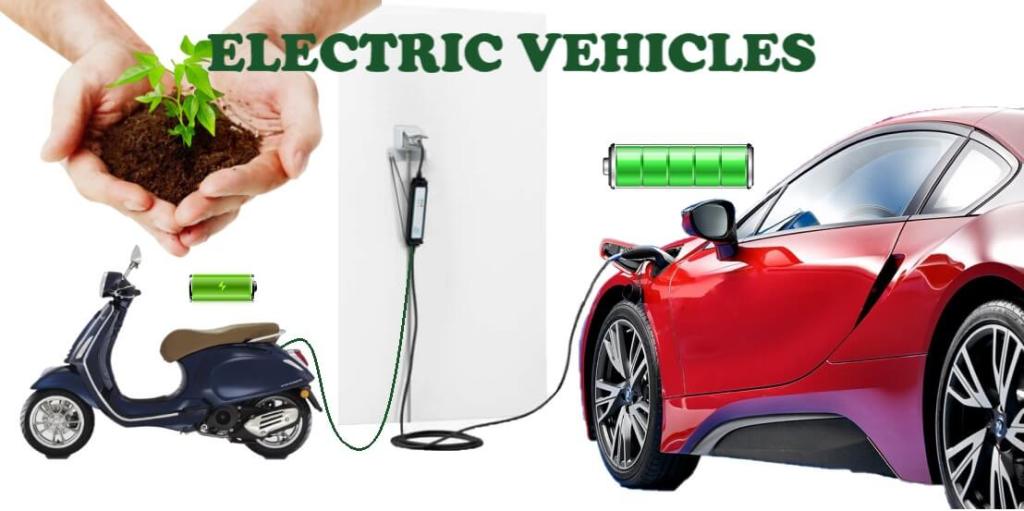
How Electric Vehicle Is Beneficial In India

Union Finance Minister Nirmala Sitharaman presented the first Union Budget of the Modi government in its second term on 5th July-2019. Union Budget attracts a lot of Indian people this time as government touched some areas towards “New India”. Indian Government looks very optimistic and aggressive to speed up the country’s development. She said in her first budget speech with a reference to New India “for which people voted the government in Lok Sabha election”. She added that “We have set the ball rolling for a New India and the country will become a $5-trillion economy in next few years”. Currently, it stands at $2.7 trillion.

Some highlights of Union Budget 2019 are changes in Income Tax slab and corporate tax slab, custom duty, digital transactions, a public-private partnership in railway, house for everyone, water and electricity for everyone, Swacch Bharat Abhiyan, Metro Rail operations, world-class city project, etc. etc. There are a lot more announcements but one major announcement for pushing electric mobility in India which is an unexpected announcement by the NDA 2.0 government. This announcement also attracts many people including me.

The Indian automobile industry is the 4th largest in the world and expected to emerge as the world’s third-largest by 2021. Currently, the automotive sector contributes more than 7 percent to India’s GDP and the plan is to increase the contribution to 12 percent by 2026. The electric vehicle announcement also boosts this market and will see more and more opportunities in this field.

The Indian government is now in the race to switch to all-electric cars by 2030. Tata Motors and Mahindra and Mahindra are the two homegrown automotive giants that are currently leading the electric vehicle revolution in the country.

What is Electric Vehicle:

Electric vehicles, as the name suggests, run at least partially on electricity. Instead of fossil fuel-driven internal combustion engines, these vehicles are powered by electric motors for propulsion. The electric motor, in turn, derives energy from rechargeable batteries, solar panels or fuel cells. In plug-in hybrid electric vehicles, a battery, which can be plugged into the electric grid for charging, is used to power an electric motor.

Advantage of Electric Vehicle in India:

There are many advantages of Electric Vehicle in India. Some advantages are short term and some are long term. Some advantages are personal and some are social so this decision taken by the Indian Government is good for all, everyone will be benefited directly or indirectly.

Here are some advantages of using Electric Vehicles:

Less Fuel Cost: The main advantage of using an electric vehicle is that less fuel cost. If we compared to petrol and diesel, electricity is cheaper in India. A fully charged car can run approximately 280-300 Km which is very lesser than petrol or diesel. There are fluctuations in petrol and diesel prices but electricity prices are mostly constant. Just like a smartphone, you can plug in your vehicle and charge whenever you need so need to go any station.

Cheaper to maintain: Electric vehicle has very less moving parts than a conventional petrol/diesel vehicle. There are relatively little servicing and no expensive exhaust systems, starter motors, fuel injection systems, radiators and many other parts that aren’t needed in an EV. With just one moving part – the rotor – EVs are particularly simple and very strong. Just maintain the brakes, tyres, suspension, and batteries, that’s it. A lot of batteries are coming in the market with replacement warranty so whenever you need, you can replace the battery.

Clean and Green Environment: Electric Vehicles are environment-friendly. Because these types of vehicles don’t consume fossil fuels, they do not produce any tailpipe emissions which contribute to climate change and smog. Charging your EV on renewable energy such as solar or wind minimizes these emissions even more.

Health benefit: If there are no harmful emissions then but obvious air quality will improve and as well as our environment will be clean. It’s directly affecting our health and will reduce ecological damages also. EVs are also quieter than petrol/diesel vehicles which mean less noise pollution also.

Easy To Operate: Because of the simplified design, Electric Vehicles are very easy to operate. Most of the electric vehicles in India come with a single driving mode which is very easy to handle. It can drive by housewives, senior citizens, and students also very easily.

Economic Development: According to the Petroleum Planning & Analysis Cell (PPAC), India spent USD 111.9 billion on oil imports in 2018-19. This is a huge amount we are paying for oil. If we use EVs then our country can save this amount which can be utilized to develop in many areas.  

Job Opportunities: As the demand for electric vehicles increases, more opportunities will be created for research and development, manufacturing, electrical contracting and green tourism. India is planning for manufacturing of battery and charging equipment, lithium mining and battery recycling so there will be huge potential in this market.

Dis-advantage of Electric Vehicle in India:

Limited Range: Electric Vehicles are fixed for a specific range.  They can’t go beyond that. Most of the electric vehicles can cover a range of 100 Km. You cannot go for a long ride with a single battery; you need a backup battery also. However, research is going on to improve the range of electric vehicles.

Charging Stations: In India, very few EV charging stations are available. Only main cities like Delhi, Mumbai, Bengaluru, and Hyderabad have charging stations. Some thousands of charging stations should be set up all around the country to reduce the scarcity of recharging stations.

Recharge Time: Charging electric vehicles do take longer. To recharge a battery fully, it takes almost 8-10 hours which is a very long time. Unfortunately, we do not have any charger who can charge the battery in a few minutes but the research team is working on it and very soon they will find out the solution.  

There is one more challenge which is the biggest one.  

Lack of renewable energy and grid infrastructure:

Electricity is mainly produced by burning coal in India, which produces a great number of greenhouse emissions. With the introduction of EVs and charging infrastructure, the electricity demand will surely increase a lot and the whole point of introducing EVs to reduce GHG* emissions would be ineffective if all this electricity was produced by burning coal. Moreover, India’s Electric Distribution companies hold debts and are unable to provide sufficient energy for the whole country adequately. If EVs were to enter this equation, the sudden increase in electricity requirement would put extra load on these companies then these companies will decide the pricing of the electricity as well the demand on the grid.

It will affect coal mining’s also. The demand for coal will also be high so this is also one more challenge for the government to provide sufficient coal for electric production.

* A greenhouse gas (sometimes abbreviated GHG) is a gas that absorbs and emits radiant energy within the thermal infrared range. Greenhouse gases cause the greenhouse effect.

Indian Government initiatives:

Finance Minister Nirmala Sitharaman announced income tax rebates of up to ₹1.5 lakh to customers on interest paid on loans to buy Electric Vehicles, with a total exemption benefit of ₹2.5 lakh over the entire loan period. The minister also announced the customs duty exemption on lithium-ion cells, which will help lower the cost of lithium-ion batteries in India as they are not produced locally. Makers of components such as solar electric charging infrastructure and lithium storage batteries and other components will be offered investment-linked income tax exemptions under Section 35 AD of the Income Tax Act, and other indirect tax benefits. This is a very good initiative by NDA 2.0 Modi Government.

Now, this is the time of revolution of Electric Vehicles. The market opportunities will grow rapidly in this area. Indian Government already provides a lot of schemes for startups, for small businesses, and corporates also.

The NITI-Aayog is considering a policy proposal to ban all internal combustion engine two-wheelers under 150cc by 2025 and three-wheelers by 2023.

The government has already moved the GST council to lower the GST rate on electric vehicles from 12% to 5%.

The Indian government has developed a two-pronged strategy aimed at both buyers and manufacturers where they offered subsidies of $1.4 billion. Of the $1.4 billion, about $1.2 billion has been earmarked for subsidies, $140 million for charging infrastructure and some $5 million for administrative expenses and advertising. The balance $50 million is money that was committed in the existing policy which expires March 2019.

Overall this is a good initiative by the Government of India. The only challenge is the production of Electricity which is a very big challenge. The government should think so that we can save our environment and the new generation can survive in a pollution-free environment.

Free To Hit is a blogging portal where you can read on many topics. We also welcome you to write for us. You can read this blog to click here ‘How Electric Vehicle Is Beneficial In India‘.

ICC Women’s T20 World Cup 2020

Cricket fever started around the world. It starts with ICC Women’s T20 World Cup 2020 then Indian Premier League 2020 and after that ICC Men’s T20 World Cup 2020. ICC Women’s T20 World Cup started from February 21 (Friday) in Australia. This is the seventh edition of the tournament and 10 teams are participating – Australia, England, West Indies, Sri Lanka, Pakistan, New Zealand, Bangladesh, South Africa, India, and debutant Thailand. All the ten teams divided in into two groups.

First match of the ICC Women’s T20 World Cup played between defending champion Australia and India. Australia team is the most successful team in the event having won the title four times. The ICC is introducing the front-foot no-ball technology for the first time in the Women’s T20 World Cup. According to the new no-ball rule, the third umpire will call the front-foot no balls, communicating this with on-field umpires. ICC Women’s T20 World Cup 2020 league matches groups are:

Group AGroup B
New ZealandEngland
Sri LankaSouth Africa
BangladeshPakistan
IndiaWest Indies
AustraliaThailand

Players for ICC Women T20 World Cup 2020

India:

Harmanpreet Kaur (Captain), Tanya Bhatia, Rajeshwari Gayakwad, Harleen Deol, Richa Ghosh, Smriti Mandhana, Shikha Pandey, Arundathi Reddy, Veda Krishnamurthy, Jemimah Rodrigues, Deepti Sharma, Pooja Vastrakar,  Poonam Yadav, Radha Yadav, Shafali Verma.

Australia:

Meg Lanning (Captain), Ashleigh Gardner, Nicola Carey, Erin Burns, Rachael Haynes, Alyssa Healy, Jess Jonassen, Delissa Kimmince, Sophie Molineux, Beth Mooney, Ellyse Perry, Megan Schutt, Annabel Sutherland, Georgia Wareham, Tayla Vlaeminck.

New Zealand:

Sophie Devine (Captain), Lauren Down, Suzie Bates, Maddy Green, Hayley Jensen, Holly Huddleston, Leigh Kasperek, Amelia Kerr, Jess Kerr, Rosemary Mair, Katey Martin, Anna Peterson, Rachel Priest, Lea Tahuhu

Sri Lanka:

Chamari Atapattu (Captain),  Kavisha Dilhari, Hansima Karunaratne, Nilakshi de Silva, Achini Kulasuriya, Sugandika Kumari, Harshitha Madavi, Dilani Manodara, Hasini Perera, Ama Kanchana, Sathya Sandeepani, Anushka Sanjeewani, Shashikala Siriwardena, Umesha Thimeshani, Udeshika Prabodani.

Bangladesh:

Salma Khatun (Captain), Fahima Khatun, Ayasha Rahman, Fargana Hoque Pinky, Jahanara Alam, Murshida Khatun, Nahida Akter, Nigar Sultana Joty, Panna Ghosh, Ritu Moni, Rumana Ahmed, Sanhida Islam, Shamima Sultana, Sobhana Mostary, Khadiza Tul Kubra.

England:

Heather Knight (Captain), Anya Shrubsole, Tammy Beaumont, Katherine Brunt, Freya Davies, Sophie Ecclestone, Georgia Elwiss, Sarah Glenn, Amy Jones, Nat Sciver, Fran Wilson, Lauren Winfield, Danni Wyatt, Kate Cross, Mady Villiers.

South Africa:

Dane van Niekerk (Captain), Nadine de Klerk, Trisha Chetty, Mignon du Preez, Shabnim Ismail, Marizanne Kapp, Ayabonga Khaka, Masabata Klaas, Lizelle Lee, Sune Luus, Nonkululeko Mlaba, Nondumiso Shangase, Tumi Sekhukhune, Chloe Tryon, Laura Wolvaardt.

Pakistan:

Bismah Maroof (Captain), Aliya Riaz, Aiman Anwar, Anam Amin, Ayesha Naseem, Fatima Sana, Iram Javed, Javeria Khan, Muneeba Ali, Nida Dar, Omaima Sohail, Sadia Iqbal, Sidra Nawaz, Syeda Aroob Shah, Diana Baig.

West Indies:

Stafanie Taylor (Captain), Shemaine Campbelle, Shamilia Connell, Alliyah Alleyne,  Deandra Dottin, Afy Fletcher, Cherry-Ann Fraser, Sheneta Grimmond, Chinelle Henry, Lee-Ann Kirby, Hayley Matthews, Anisa Mohammed, Chedean Nation, Shakera Selman, Britney Cooper.

Thailand:

Sornnarin Tippoch (Captain), Naruemol Chaiwai, Natthakan Chantam, Onnicha Kamchomphu, Rosenanee Kanoh, Suwanan Khiaoto, Nannapat Khoncharoenkai Suleeporn Laomi, Soraya Lateh, Nattaya Boochatham, Wongpaka Liengprasert, Ratanaporn Padunglerd, Thipatcha Putthawong, Chanida Sutthiruang, Phannita Maya.

Schedule of ICC Women T20 World Cup: Venue, Time Table, and Time in IST and local time

S.No.DateMatchStadiumVenueTime ISTLocal Time
121 FebruaryInd vs AusSydney Showground StadiumSydney1:30 PM7:00 PM
222 FebruaryWI vs ThaiW.A.C.A. GroundPerth11:30 AM2:00 PM
322 FebruaryNZ vs SLW.A.C.A. GroundPerth4:30 PM7:00 PM
423 FebruaryEng vs SAW.A.C.A. GroundPerth4:30 PM7:00 PM
524 FebruaryAus vs SLW.A.C.A. GroundPerth11:30 AM2:00 PM
624 FebruaryInd vs BanW.A.C.A. GroundPerth4:30 PM7:00 PM
726 FebruaryEng vs ThaiManuka OvalCanberra8:30 AM2:00 PM
826 FebruaryWI vs PakManuka OvalCanberra1:30 PM7:00 PM
927 FebruaryInd vs NZJunction OvalMelbourne8:30 AM2:00 PM
1027 FebruaryAus vs BanManuka OvalCanberra1:30 PM7:00 PM
1128 FebruarySA vs ThaiManuka OvalCanberra8:30 AM2:00 PM
1228 FebruaryEng vs PakManuka OvalCanberra1:30 PM7:00 PM
1329 FebruaryNZ vs BanJunction OvalMelbourne8:30 AM2:00 PM
1429 FebruaryInd vs SLJunction OvalMelbourne1:30 PM7:00 PM
151 MarchSA vs PakSydney Showground StadiumSydney8:30 AM2:00 PM
161 MarchEng vs WISydney Showground StadiumSydney1:30 PM7:00 PM
172 MarchSL vs BanJunction OvalMelbourne8:30 AM2:00 PM
182 MarchAus vs NZJunction OvalMelbourne1:30 PM7:00 PM
193 MarchPak vs ThaiSydney Showground StadiumSydney8:30 AM2:00 PM
203 MarchWI vs SASydney Showground StadiumSydney1:30 PM7:00 PM
215 MarchSemi-Final 1 (A1 vs B2)Sydney Showground StadiumSydney8:30 AM2:00 PM
225 MarchSemi-Final 2 (B1 vs A2)Sydney Showground StadiumSydney1:30 PM7:00 PM
238 MarchFinalJunction OvalMelbourne1:30 PM7:00 PM

Interesting Facts About Niagara Falls

Niagara Falls is one of the most beautiful and attractive places around the world. It is truly a wonder of mother of nature which attracts millions of tourist every year. It has been a popular tourist attraction for over 200 years. Niagara Falls is located on the Niagara River which drains Lake Erie into Lake Ontario, the combined falls have the highest flow rate of any waterfall in North America. Niagara Falls is famed both for its beauty and as a valuable source of hydroelectric power. The word “Niagara” is derived from the Iroquois Indian word “Onguiaahra” meaning “the strait”.

Characteristics of Niagara Falls:

The famous Niagara Falls is located in Niagara River, North America; a 36 Mile (58 km) channel that connects Lake Erie and Lake Ontario. The difference in elevation between the two lakes is about 325 feet (99 meters), and half of that height occurs at the falls. The Niagara Falls found at the border of New York, the United States and Ontario, Canada. The falls is actually made up of three waterfalls: the Horseshoe Falls (also known as the Canadian Falls), the American Falls and the Bridal Veil Falls. Horseshoe Falls is located on the Canadian side while the other are located in New York.

WaterfallHeight of WaterfallStretch Area
Horseshoe Falls – Canadian Side167 Feet (51 m)2700 Feet (823 m)
American Falls – New York90-120 Feet (27.5 to 36.5 m)940 Feet (286.5 m)
Bridal Veil Falls – New York90-120 Feet (27.5 to 36.5 m)45 Feet (14m)

Together, the average width of the entire falls is 3,950 feet (1,204 m).

The falls are 27 km (17 mi) north-northwest of Buffalo, New York, and 121 km (75 mi) south-southeast of Toronto, between the twin cities of Niagara Falls, Ontario, and Niagara Falls, New York. Iguazu Falls also shares Brazil and Argentina that is also a world famous water fall and tourist destination. Niagara Falls covers almost a land area of 212 sq. km. (81.9 sq mi). More than 6 million cubic feet (168,000 cubic meters), or about 70 Olympic-size swimming pools, of water go over the falls every minute and the speed of water is around 25 mph. The deepest point in the Niagara River is just below Horseshoe Falls, at 167 feet (51 m) deep. Niagara Falls is not the tallest waterfall in the world; however, the beauty of the falls comes from the height and the incredible volume of water running over the falls at a given time. Niagara Falls Ontario Canada is known as the Honeymoon Capital of the world.

Niagara Falls was the largest hydropower facility in the Western World when the first hydroelectric project went live in 1961. It now produces a phenomenal amount of electricity for the US state of New York, around 2.4 gigawatts. There are several hydropower plants in and around Niagara Falls now, all producing electricity for America and Canada.

Interesting Facts About Niagara Falls:

  • The Niagara Falls are about 10,000 years old.
  • In October 1829, Sam Patch jumped from a high tower into the gorge below the falls and survived.
  • Englishman Captain Matthew Webb, the first man to swim the English Channel, drowned in 1883 trying to swim the rapids downriver from the falls.
  • On October 24, 1901, 63-year-old Michigan school teacher Annie Edson Taylor became the first person to go over the falls in a barrel as a publicity stunt.
  • The French built the first fort above Niagara Falls in 1679, known as Fort Conti. That fort only lasted for about a year.
  • The British captured Niagara Fort in 1759 during the French and Indian War.
  • The first man-powered ferry opened in 1820 to ferry passengers across the Niagara Gorge.
  • A canal to divert water from the river to power plants was built in 1861, and the first electric streetcar began operation in 1887.
  • Niagara Falls State Park is the oldest state park in America, established in 1885 at the Niagara Reservation. The park covers more than 400 acres, which includes about 140 acres under water.
  • Nikola Tesla and George Westinghouse designed and built the first hydroelectric power plant in the world in 1895.
  • Power generation facilities along the Niagara River supply more than one-quarter of all power used in New York State and Ontario.
  • The cities of Niagara Falls in New York and in Ontario were incorporated in 1892 and 1903, respectively
  • During periods of peak flow in the summer and fall, more than 700,000 gallons of water per second pour over Niagara Falls.
  • Four of the five Great Lakes drain into the Niagara River, (Superior, Michigan, Huron and Erie) before emptying into Lake Ontario. These five Great Lakes make up almost one-fifth of the world’s fresh water supply.
  • The only recorded freeze-up of the river and falls was due to an ice jam on March 29, 1848. The years 1885, 1902, 1906, 1911, 1932, 1936, 2014, 2017 and 2019 are noted for partial freezing of the falls.
  • The flow over the American Falls was stopped completely for several months in 1969 just to determine the feasibility of removing the large amount of loose rock from the base of the falls to enhance its appearance.
  • The Minolta Tower rises 325 feet above the Horseshoe Falls. It is an observation tower that overlook the Niagara Falls.
  • Skylon Tower rises 775 feet above the Falls. Skylon Tower, Ontario is an observation tower that overlooks both the American Falls, New York, and the Horseshoe Falls, Ontario, from the Canadian side of the Niagara River.
  • Hydro Electricity generated in Niagara Falls at the Sir Adam Beck 1 and Sir Adam Beck 2 power stations from redirected water flow serves the electrical needs of Southern Ontario and Western New York.
  • Until 1886, when the Statue of Liberty was erected, the Falls at Niagara were the symbol of America and the New World.
  • At Grand Island, the Niagara River divides into the west channel, known as the Canadian or Chippawa Channel, and the east channel, known as the American or Tonawanda Channel
  • The Chippawa Channel is approximately 17.7 kilometres (11 mi.) in length and varies from 610 to 1220 metres (2,000 to 4,000 ft.) in width. Water speed ranges from 0.6 to 0.9 metres per second (2 to 3 ft. per second). This channel carries approximately 60% of the total river flow.
  • The Tonawanda channel is 24 kilometres (15 mi.) long and varies from 460 to 610 metres (1,500 to 2,000 ft.) in width above Tonawanda Island. Downstream, the channel varies from 460 to 1220 metres (1,500 to 4,000 ft.) in width. Speed ranges from 0.6 to 0.9 metres per second (2 to 3 feet per second).
  • Excellent views of the falls are obtained from Queen Victoria Park on the Canadian side.
  • The Horseshoe Falls, which carry about 90 percent of the river’s discharge.
  • 3,160 tons of water flows over Niagara Falls every second. This accounts for 75,750 gallons of water per second over the American Fall & Bridal Veil Falls and 681,750 gallons per second over the Horseshoe Falls.
  • The water falls at 32 feet per second over the Falls, hitting the base of the Falls with 280 tons of force at the American Falls & Bridal Veil Falls and 2,509 tons of force at the Horseshoe Falls.
  • Niagara Falls is capable of producing over 4 million kilowatts of electricity, which is shared by the United States and Canada.
  • The Niagara River ecosystems support many of New York State’s protected animal species, such as the Lake Sturgeon, Peregrine Falcon and American Bald Eagle.

Free to hit is a social portal where you can read more about your interest. You can read this blog to click here “Niagara Falls“.

What Is Balanced & Healthy Food for Healthy Lifestyle

Have you ever noticed that now days we all are getting sick very easily and especially new generation as compared to our previous generation. The reason is our weak immunity and our lifestyle. Everyone’s life is so fast today; people do not have time to take care of ourselves. What they are eating, it doesn’t matter; they are eating just to fill their stomach. We all know that what we are eating is not pure and not organic and above that, we are filling our stomach with fast food or junk food so what kind of energy you will get from that food. But obvious, immunity will be weak. So here we will discuss about the healthy food and our lifestyle. 

What is Healthy Food?

Everyone want to know about the healthy food; what it is, from where we can get, how much we need to eat and how much energy we will get from that food. All these questions are there in everyone’s mind. So first of all we want to clear that if you are feeling great all day, always feels energetic, no tiredness and if your immune system is strong; you are eating a complete healthy food. Healthy food includes protein, carbohydrates, fat, water, vitamins, and minerals.

A healthy diet and lifestyle are your best weapons to fight any disease. The key to a healthy diet is to eat the right amount of calories for how active you are so you balance the energy you consume with the energy you use. If your current diet is quite different to the recommendations, try starting with just one or two little changes at a time rather than changing everything at once. The cornerstone of a healthy diet should be to replace processed food with real food. If you eat or drink more than your body needs, you’ll put on weight and if you eat and drink too little, you’ll lose weight. You should also eat a wide range of foods to make sure you’re getting a balanced diet and your body is receiving all the nutrients it needs.

What is Calories?

What we are eating, we are getting calories from that food. The number of calories in a food is a measurement of the amount of energy stored in that food. Calories are uses in every activity like walking, talking, breathing, etc. A person’s specific daily calorie intake can vary depending on their age, gender, and physical activity level. Men generally need more calories than women.

Here is the table of daily calorie intake.

Children ages 2 to 8 years1,000 to 1,400 calories
Girls ages 9 to 13 years1,400 to 1,600 calories
Boys ages 9 to 13 years1,600 to 2,000 calories
Active women ages 14 to 30 years2,400 calories
Sedentary women ages 14 to 30 years1,800 to 2,000 calories
Active men ages 14 to 30 years2,800 to 3,200 calories
Sedentary men ages 14 to 30 years2,000 to 2,600 calories
Active men and women over 30 years2,000 to 3,000 calories
Sedentary men and women over 30 years1,600 to 2,400 calories

How To Achieve A Healthy Food:

Eating plenty of food is not a guarantee of your good health. A healthy food includes protein, carbohydrates, fat, water, vitamins, and minerals. The following are essential parts of a balanced diet.

Protein: – Protein is a vital nutrient that is required for building, maintaining, and repairing tissues, cells, and organs throughout the body. Protein is broken down in 20 Amino Acids when you eat which is required for growth and energy. The amino acid tryptophan influences mood by producing serotonin, which can reduce symptoms of depression and anxiety and improve overall cognitive function. Protein also keep your immune system functioning properly, maintains heart health and your respiratory system.

Animal sources of protein are meat, poultry, fish, dairy products, and eggs while plant-based protein sources such as grains, beans, vegetables, nuts, tofu, yogurt, peanut butter, soy milk, cheese, etc.

Carbohydrates: – Carbohydrates are one of your body’s main sources of energy. Medical science recommended that 45 to 65 percent of your daily calories should come from carbohydrates. It include potatoes, bread, rice, pasta and cereals. Carbohydrates should come from complex, unrefined carbs (vegetables, whole grains, fruit) rather than sugars and refined carbs.

Good Carbohydrates include unrefined whole grains such as whole wheat or multigrain bread, brown rice, barley, quinoa, bran cereal, and oatmeal. You can get Carbohydrates from non-starchy vegetables (spinach, green beans, Brussels sprouts, celery, tomatoes), legumes (kidney beans, baked beans, peas, lentils), nuts and from fruits.

Fat: – Not all fat is bad for our body. Fat is a type of nutrient which is also required by our body just like protein and carbohydrates. Our body needs some fat for energy, to absorb vitamins, and to protect your heart and brain health. Healthy fats such as Omega 3 are vital to our physical and emotional health. Including more healthy fat in our diet can help improve your mood, boost your well-being, and even trim our waistline.

Monounsaturated fat and Polyunsaturated fat are good for health. Monounsaturated fat includes olive, canola, peanut, & sesame oils, avocados, olives, nuts (almonds, peanuts, macadamia, hazelnuts, pecans, and cashews), peanut butter, etc.

Polyunsaturated fat include sunflower, sesame, and pumpkin seeds, flaxseed, walnuts, fatty fish (salmon, tuna, mackerel, herring, trout, sardines) & fish oil, soybean and safflower oil, soymilk, and tofu.

Calcium: – Calcium is not only good for bone, almost every cell in the body uses calcium in some way, including the nervous system, muscles, and heart. Calcium also helps in blood clot, muscles contract, and it regulate the heart’s rhythm. If you don’t get enough calcium in your diet, your body will take it from your bones to ensure normal cell function, which can lead to weakened bones or osteoporosis. Calcium deficiency can contribute to mood problems such as irritability, anxiety, depression, and difficulty sleeping. An average person needs 1000 mg/day to 1300 mg/day calcium.

You can get good sources of calcium from dairy products, leafy green vegetables, certain fish, oatmeal and other grains, tofu, cabbage, summer squash, green beans, garlic, sea vegetables and calcium-fortified foods such as cereals and orange juice.

Fiber: – Fiber is also known as roughage. Fiber keeps your digestive system clean and healthy, easing bowel movements, and flushing cholesterol and harmful carcinogens out of the body. It can help you stay regular and lower your risk for heart disease, stroke, and diabetes. It can also improve your skin and even help you to lose weight. It may even help prevent colon cancer. Fiber comes in two varieties: Insoluble fiber which does not dissolve in water and Soluble fiber which dissolves in water.

Insoluble fiber helps to prevent constipation. It is found in whole grains, wheat cereals, and vegetables such as carrots, celery, and tomatoes.

Soluble fiber control blood sugar levels and reduce cholesterol. It is found in barley, oatmeal, beans, nuts, and fruits such as apples, berries, citrus fruits, and pears.

Conclusion:

If you include the above things in your daily food, your immunity will improve and you will stay away from any diseases and infections. A balanced diet is important because your organs and tissues need proper nutrition to work effectively. A good food, healthy food, nutritional food will definitely help you in your body and mental growth.

You can also read this blog to click here and also visit at Free To Hit

Design a site like this with WordPress.com
Get started